Collaborative science for affordable drug discovery.
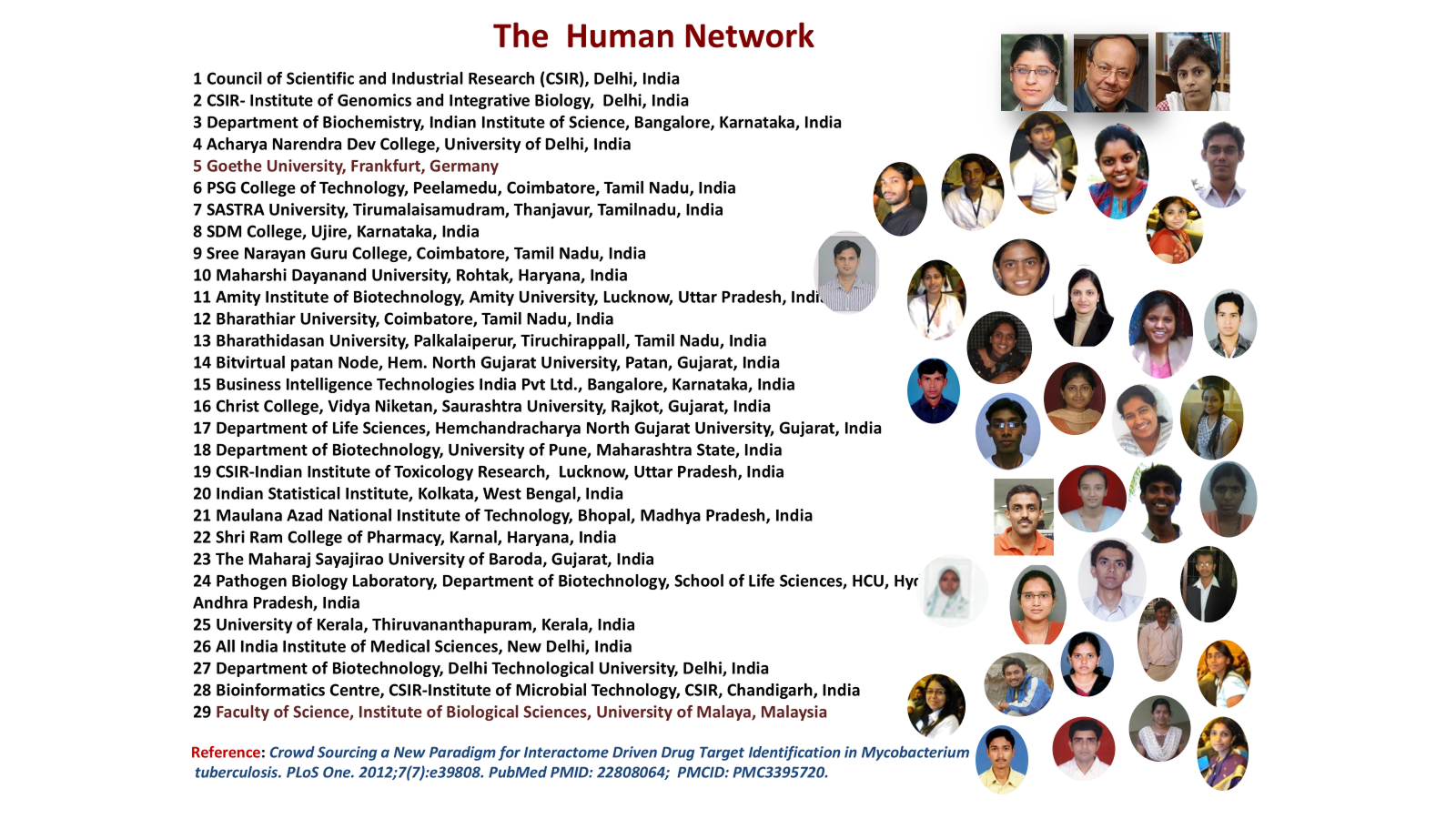
Open Source Drug Discovery (OSDD) is a CSIR-led Team India Consortium with global participation, bringing together researchers, academia, students, industries, and institutions to collaboratively discover affordable treatments for neglected tropical diseases. The initiative operates through an open-source model that enables contributors from around the world to share knowledge, resources, and expertise in the pursuit of accessible healthcare solutions.
More info →7500+
Contributors
130+
Countries
CSIR
Led Initiative
Leadership & Governance
OSDD is a collaborative project under CSIR. Individual projects are taken up by participating bodies and managed by a Principal Investigator, centrally supervised by the OSDD project director at CSIR.
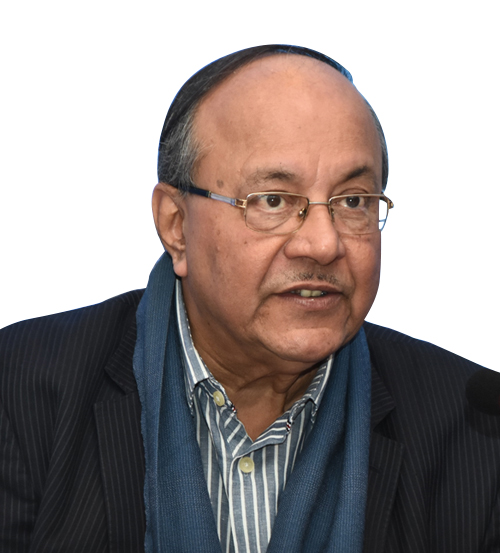
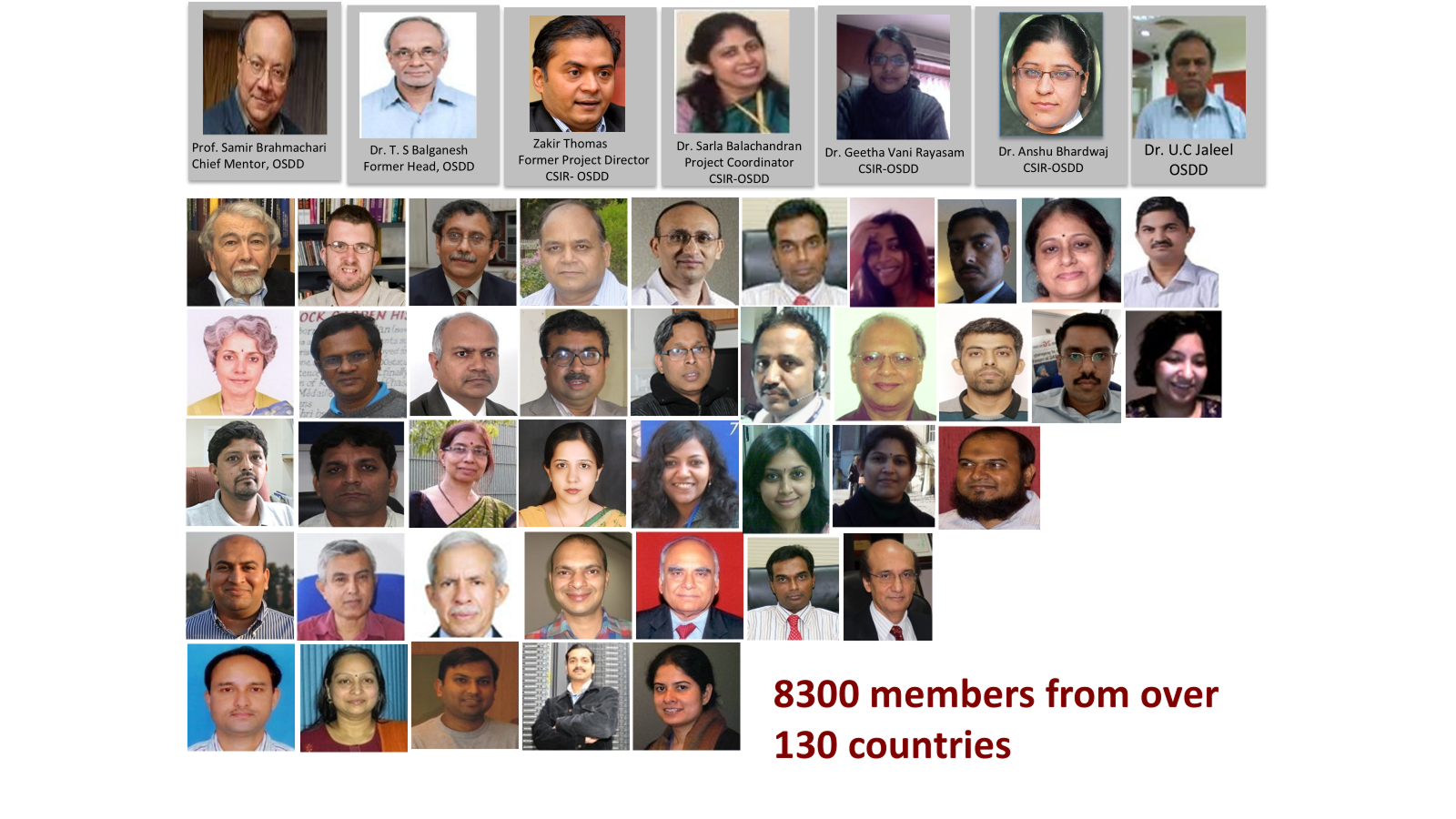
Samir K. Brahmachari
Chief Mentor
Former Director General, CSIR

Prof. Thomas Leon Blundell
Mentor
FRS FRSC FMedSci MAE, University of Cambridge & Oxford
Dr. V. M. Katoch
Mentor
Former Director General, Indian Council of Medical Research (ICMR)
N. K. Ganguli
Mentor
Former Director General, ICMR

Sarala Balachandran
Project Director
OSDD Project Director, CSIR
01
Global Community
A worldwide network of over 7,500 researchers, students, and professionals from more than 130 countries.
02
Open Collaboration
An open-source platform where academia, industry, and institutions work together to accelerate drug discovery.
03
Neglected Diseases
Focused on tropical and neglected diseases such as leishmaniasis that receive limited commercial research attention.
04
Affordable Innovation
Developing accessible and cost-effective medicines through transparent, community-driven scientific research.
Learn more →How OSDD works
OSDD operates through a Wiki-based web portal where participating agencies contribute and modify content, which is then peer-reviewed. Drugs developed remain in the public domain, with generic versions commercialised at reasonable prices by pharmaceutical companies. The discovery process is divided into ten structured work packages across two phases.
WP1
Drug Target Identification
Promotes computational activities including Systems Biology research for identifying potential drug targets. Opens participation of academia, institutions, and industries with an inclination toward open source.
WP2
Expression of Targets
Involves sharing experimental results on potential drug targets and development of assays.
WP3
Screen Development
Uses specific assays developed for different targets to screen large chemical compound libraries.
WP4
In Silico Docking
Determines the target and identifies potential sites on hit compounds for synthesis of analogs, achieving maximum potency and minimum toxicity.
WP5
Microarray Gene Expression
Identifies compounds with higher binding affinity for the target without altering the expression profile of the host cell.
WP6
Medicinal Chemistry
Includes synthesis of improved compounds.
WP7
Lead Optimization
Produces lead compounds with desirable effects while leaving the host unaffected.
WP8
Proteomics-Based Lead Affinity
Uses affinity columns to check lead compounds for human cellular protein binding.
WP9
Pre-Clinical Toxicity
Evaluates pre-clinical toxicity of the lead compounds.
WP10
Clinical Development
Clinical development of new molecular entities.
Government-backed Research
₹45.96 Cr
Core Funding (2008–2012)
Approximately $12 million earmarked by the Government of India for the period September 2008 to March 2012.
12th Plan
Continued Support (2013–2017)
The Planning Commission approved continuation of OSDD under CSIR's Scheme for Open Innovation for the 12th five-year plan.
CSIR
National Laboratories Scheme
Funds support scientific projects, infrastructure setup, and ongoing activities. Up to 2012 OSDD operated under CSIR's National Laboratories Scheme.
Impact & Milestones
7,500+
Registered Participants
110+
Active Research Projects
60+
Potential Drug Targets Identified
7
Targets Under Examination
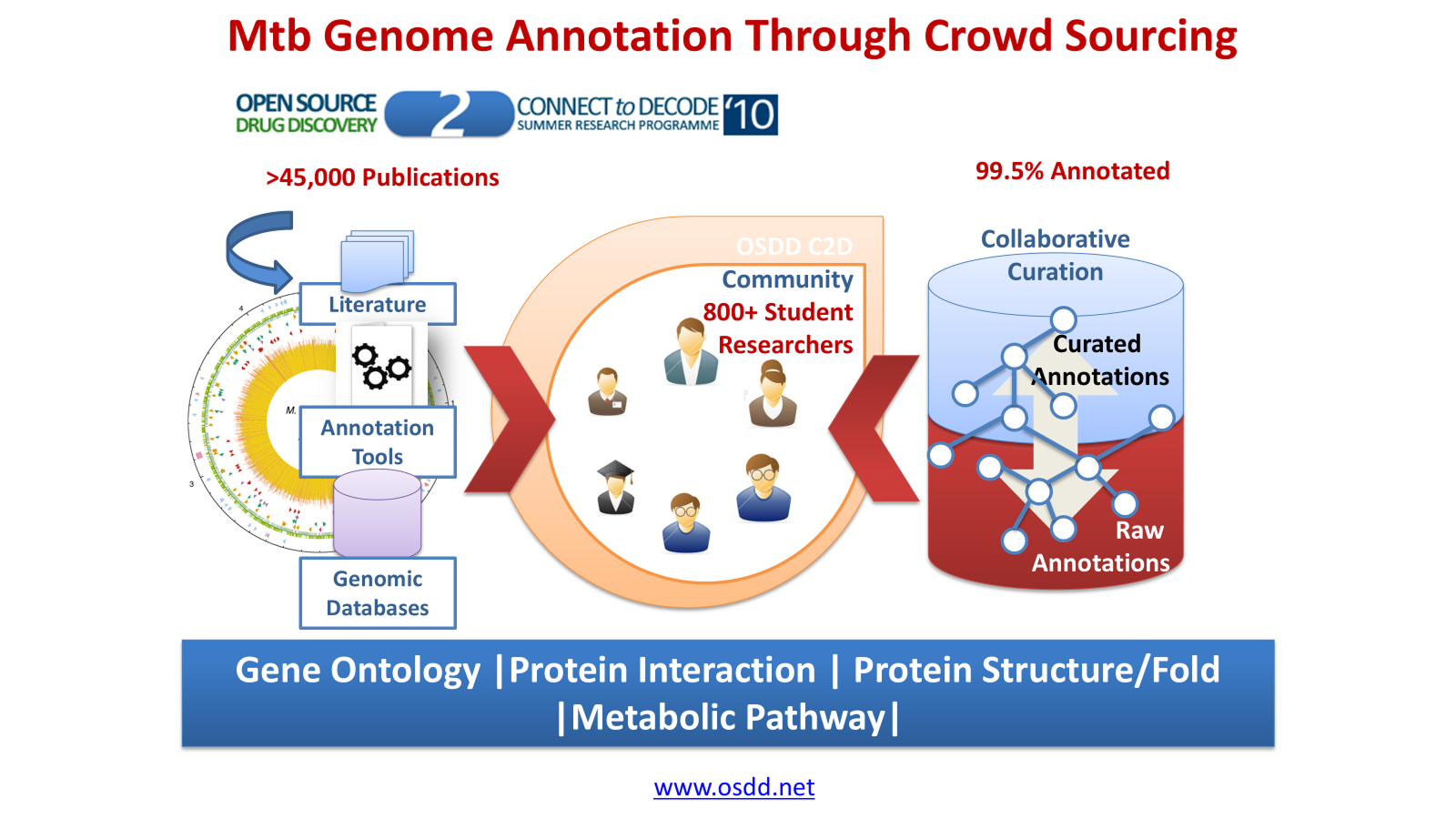
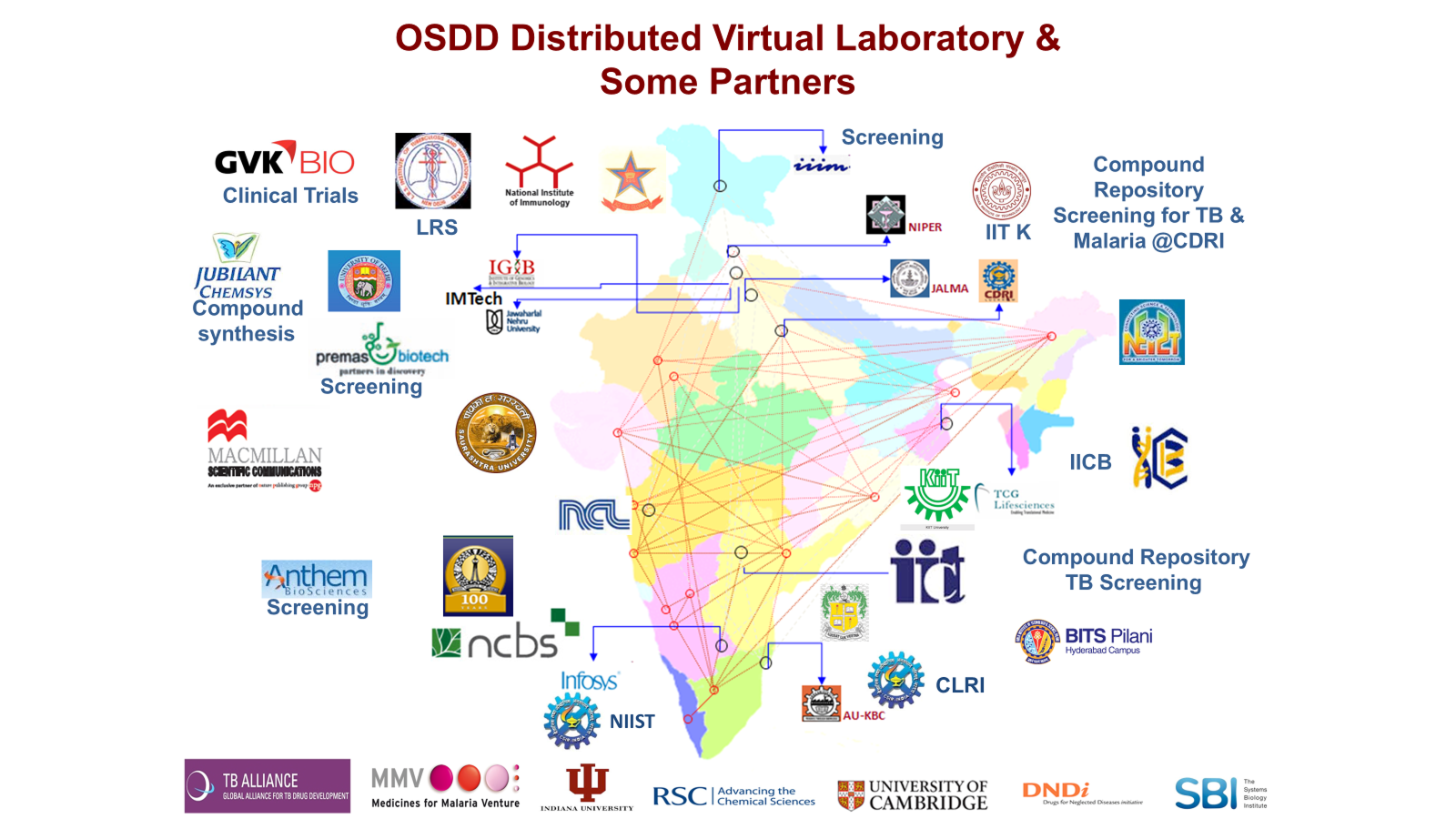
The consortium's first international publication appeared in 2009, presenting an integrative genomics map of M. tuberculosis. Since then, more than a dozen research papers have been published. OSDD currently operates the OSDD Chemistry Outreach Programme (OSDDChem), which trains students in synthetic chemistry. Compounds synthesised at universities, institutes, and colleges are submitted to the OSDDChem database and sent to CSIR-CDRI for screening against anti-TB and anti-malarial activity.